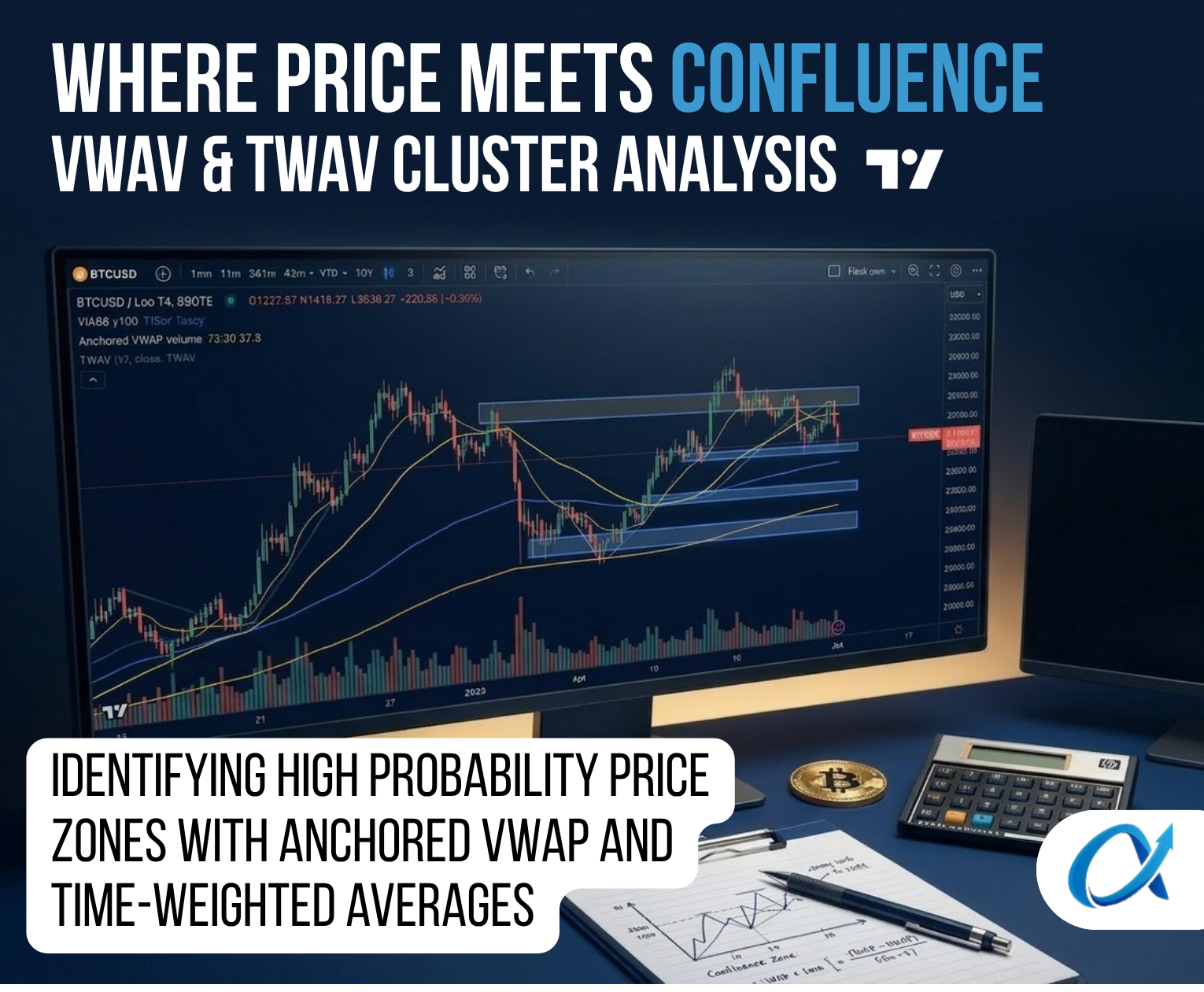


Traders often label levels on a chart as “resistance” with certainty. In reality, we don’t know a level is resistance until after price reacts. Until then, it’s simply an area where interest may develop.
What matters is understanding why participants might respond there – not naming the level prematurely.
Why resistance is only obvious after the fact
Price does not respect levels because of labels. It reacts when enough participants decide to act in the same area.
• Prior support can become an area of selling interest
• Anchors from prior highs can attract supply
• Retracements may cause buyers to pause and reassess
None of these guarantee a reversal on their own.
When multiple factors align
Levels become more meaningful when different groups are watching the same area.
• A retracement into a key percentage level
• An anchored VWAP from a prior high
• Former support now acting as potential resistance
This convergence increases the odds that behavior changes, not that price must reverse.
Important note
When several reference points align, buyers often reduce aggression, profits may be taken, and short sellers gain confidence.
This shift in psychology is what matters most.
Understanding the psychology at levels
Different participants arrive at the same area for different reasons.
• Longs may lock in gains
• New buyers hesitate
• Shorts see opportunity
The interaction between these decisions determines what happens next.
Caution
Calling a level “resistance” before price confirms it can lead to premature trades. Assumptions reduce flexibility.
The takeaway
• Resistance is only confirmed after price reacts
• Levels are areas of interest, not guarantees
• Confluence increases attention, not certainty
• Psychology drives reactions at key levels
Focus on how price behaves at levels – not what you label them.
Recent Podcast